Mexico City Art Week: Making Sense of the Labyrinth
First published by Glasstire, the magazine of record for Texas Visual Art, on February 6, 2026. Written by Jonathan Bonfiglio.
REVIEWSBEYOND SAN MIGUEL
3/25/20266 min read
Being present at Mexico City Art Week — Latin America’s biggest, wide-ranging, inexhaustible art fair — can feel like being the love interest at the center of an all-suitors late-night bare-knuckle bar-fight, where the good die young and unprincipled traders are the only ones left standing at dawn. As the dust clears, and the thin light rises, you can just about make out the rictus grin on their swollen faces as they move, gingerly supported by their slick-haired lawyers, to bank their winnings at a financial institution of choice. For even the most casual observer of these dyspeptic days of late-stage capitalism, none of this proves much of a surprise.
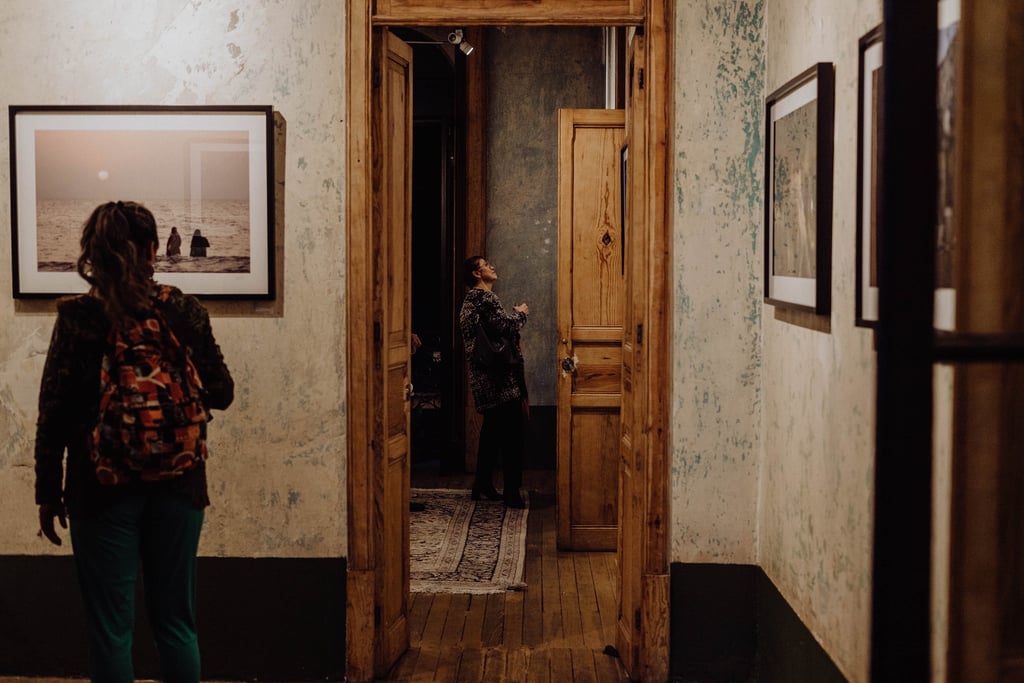
Filo: Primer Vértice is set in a traditional, 100-year-old home (Tonalá 66) in the hip Roma Norte neighborhood, and many of the works on view are undivorceable from the house they find themselves in. For some, such as twin large-scale charcoal drawings by Soi Roi entitled ¿De qué sirve un caballo sin suelo? (What use is a horse without ground?), this is because the numerous horses depicted falling through the air do so on the first floor of the building, in what is a jarring and visceral series of images.
Next door, in a room of its own, Gabriel O’Shea seals the space in plastic sheets the likes of which are used to prevent paint splashes or which, more dystopically, we have come to associate with professionalized clean-ups after torture or murders — acts that are obliquely referenced in a video piece in the center of the room, depicting victims and eviscerations both directly and also reflected to a mirror located above. The piece, titled Non-Indexed, generates a revulsion in the viewer that is difficult to shake off on exiting, as though — even despite the plastic protection — the viewer too is complicit and tainted simply by their presence.
On the floor below, Alan Pfeiffer has two distinct pieces sited close together but which are clearly in discourse with one another. First up is Freedom, a simple calligraphic sign made of barbed wire, set up as an invitation above a doorway offering entrance to the next room. Then, through the door, Pfeiffer’s widely traveled work from 2017, Flag, awaits — a Stars-and-Stripes echo made from the clothes of migrants, which Pfeiffer collected over years on Mexico’s railways.
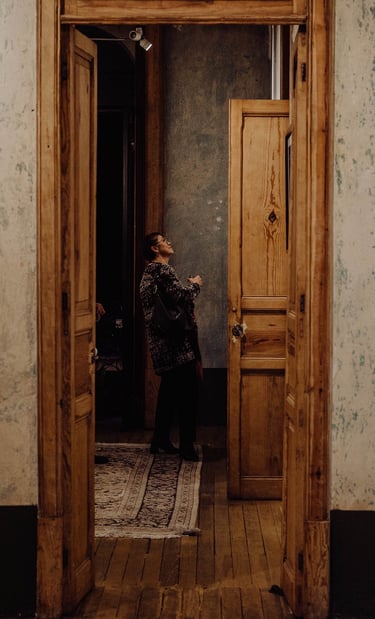
For those who prefer to go searching for surprises, Mexico City is full of them, and not just during art week. One of the most rewarding of these lies hidden behind an unremarkable light store in the central Barrio Chino. Very, very well-concealed here is Dolores 54 (the address and the name are one and the same) a gallery/residency space/multidisciplinary events venue located in a beautiful house impossible to see from the street. If you find your way in, you’ll deserve the attention and care you’ll hear shared by those who drive the vision behind this unique venue. And if you don’t, you can buy a light fitting. It’ll be useful somewhere down the line.
Truth-be-told, in one of the greatest cities on the planet, this strategy is your greatest ally. Because Mexico City refuses to grant order or planning its due, even stoops to sabotage to prevent it from happening. There is no better way to experience the city and its art fairs than by stumbling across the little known, taking a chance, pausing to engage with no expectations or pre-conceived notions — because despite its size Mexico City is actually mostly a really human space. As is most of Mexico.
The universe has various intractable laws, we are told, but one of the most enduring is that the more you display your humanity, the more others will reflect theirs back to you.
Alongside the new and surprising, there are also the grand old dames of Mexico's art establishment, open year-round and always a draw. One of the most emblematic of these — and worth a visit as much for its architecture as the worst it holds — is El Museo Tamayo Arte Contemporáneo (more usually known as the Museo Rufino Tamayo), in Chapultepec Park. On view here during art week, and beyond, is the curatorial hybrid that is El gesto y lo invisible (The gesture & the invisible), a collective exhibition that sits somewhere between contemporary art, site-specific interventions, drawing, and dance. Among the participating artists is Brendan Fernandes, who has adapted his 2015 series Still Move to include the installation of rubber balls alongside a video projection, which features close-up scenes of dancers massaging their bodies with these same objects. The work of Fernandes — and renowned Canadian artist, choreographer, and educator based in Chicago — is always compelling in the way it addresses the strengths and vulnerabilities of bodies, communities, and societies, especially in the context of race and sexual identities.
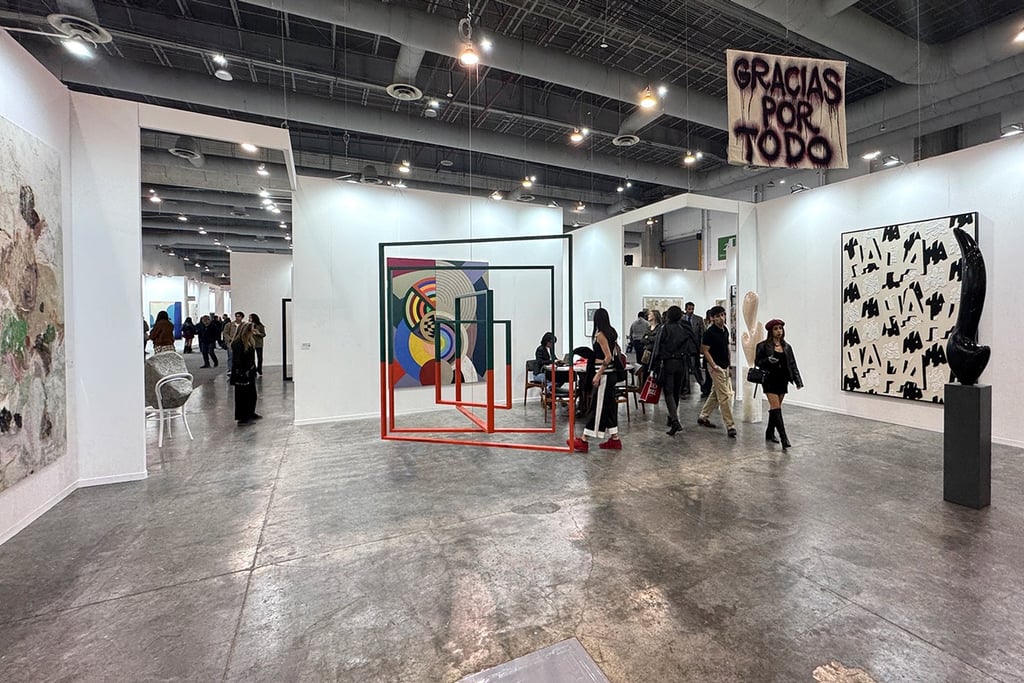
An installation view of OMR’s booth at Zona Maco, 2026
Little doubt, then, that some of Mexico City Art Week’s most important showings are also among its most lucrative. ZⓈONAMACO (also known as Zona Maco), for instance, generated a remarkable USD$620 million plus in revenue in 2025. It remains the event which anchors the week, taking place at the Centro Citibanamex between February 4 and 8, focusing inevitably on contemporary art, as well as design, photography, and antiques. “It’s undoubtedly the most important art fair in Latin America, and one of the most respected globally,” says Teófilo Cohen, Associate Director at Proyectos Monclova and part of the selection committee at Zona Maco. “Its capacity for attracting collectors, curators, and institutions from all over the world makes it an essential point of encounter for international art dialogue.” This year, over 220 galleries from nearly 30 countries are present, with a projected attendance of 80,000.
Zona Maco is not alone. Alongside this top-tier event, several others have made a name for themselves over the last few years, many in what might be termed political opposition to Zona Maco’s main feature. The most obvious of these is BADA, an event free of intermediaries which promises direct, personal access to the artist and their work. Of similar hue are Salón ACME and Feria Material, known for cutting-edge, experimental art and showcasing early-careers professionals.
2026 also sees the eighth edition of Clavo, conceptually focused on supporting emerging creative projects and artists, recognizing and celebrating this primal period of development as an essential point of public engagement. It’s as much an art laboratory as it is an art fair, and has grown in relevance and recognition in the last few editions. This year Clavo features the work of Eduardo Ponce Jiménez (Poctlii Xolotl), whose paintings intersect traditional Nahua art practices with modern materials. The Nahua are a collective of Indigenous peoples from Mesoamerica who centuries ago migrated north to the center of Mexico, populating what is now Mexico City and its broader area. Jiménez’s presented work is a shimmering depiction of related Indigenous iconography and Mesoamerican cosmovision, and its elusive nature is amplified by his description of himself as a Nahual, at once a play on the Indigenous terminology of the Nahua peoples, but which specifically refers to a shape-shifter figure of lore. There is more than a hint of the alchemist to Jiménez’s work, at once archive, artifact, and haunting.
Another significant feature of this year’s fair is Filo, a sudden hit delivered by curators Sebastián Isla and Sofía Ramírez. The pair — usually based north of Mexico City in Querétaro — are making their art fair debut with Filo: Primer Vértice (First Vertex), composed entirely of Mexican artists. Isla and Ramírez are far from new to Mexico’s cultural scene; they have been making headlines for their efforts to decentralize and generate new communities around contemporary Mexican art for some time. Their participation in the capital’s showpiece art event is not just a measure of how they are influencing the narrative and being recognized for doing so, but is also a sign of just how inescapable the orbit of this behemoth art event is in Mexico’s capital.
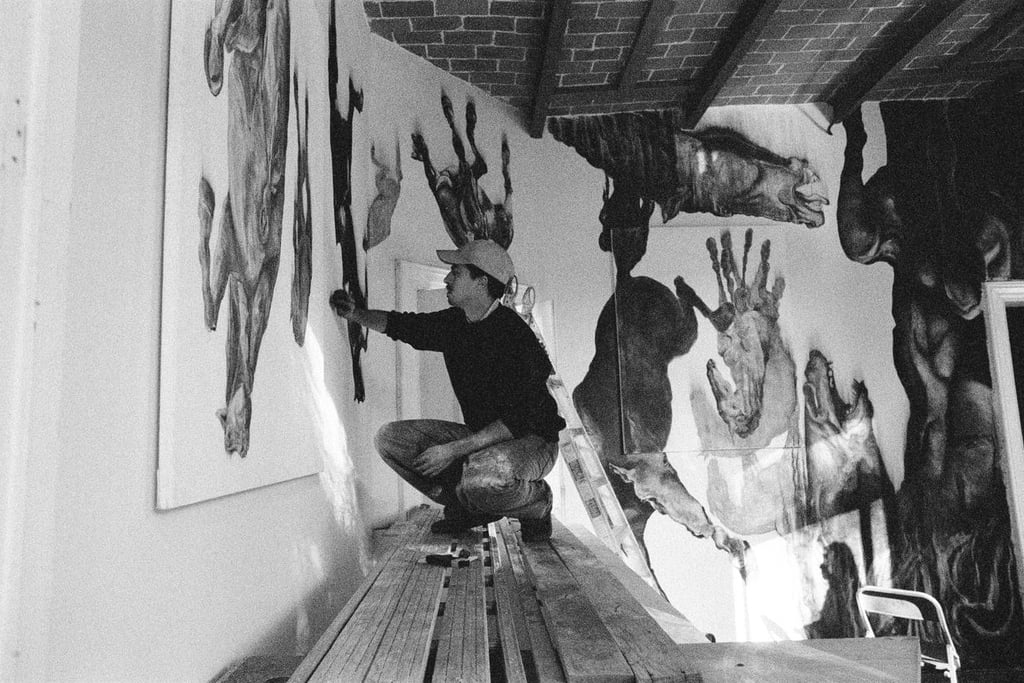
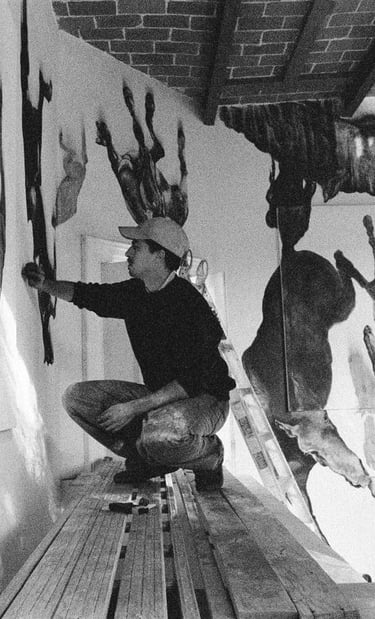
Soi Roi works on his installation “¿De qué sirve un caballo sin suelo?”
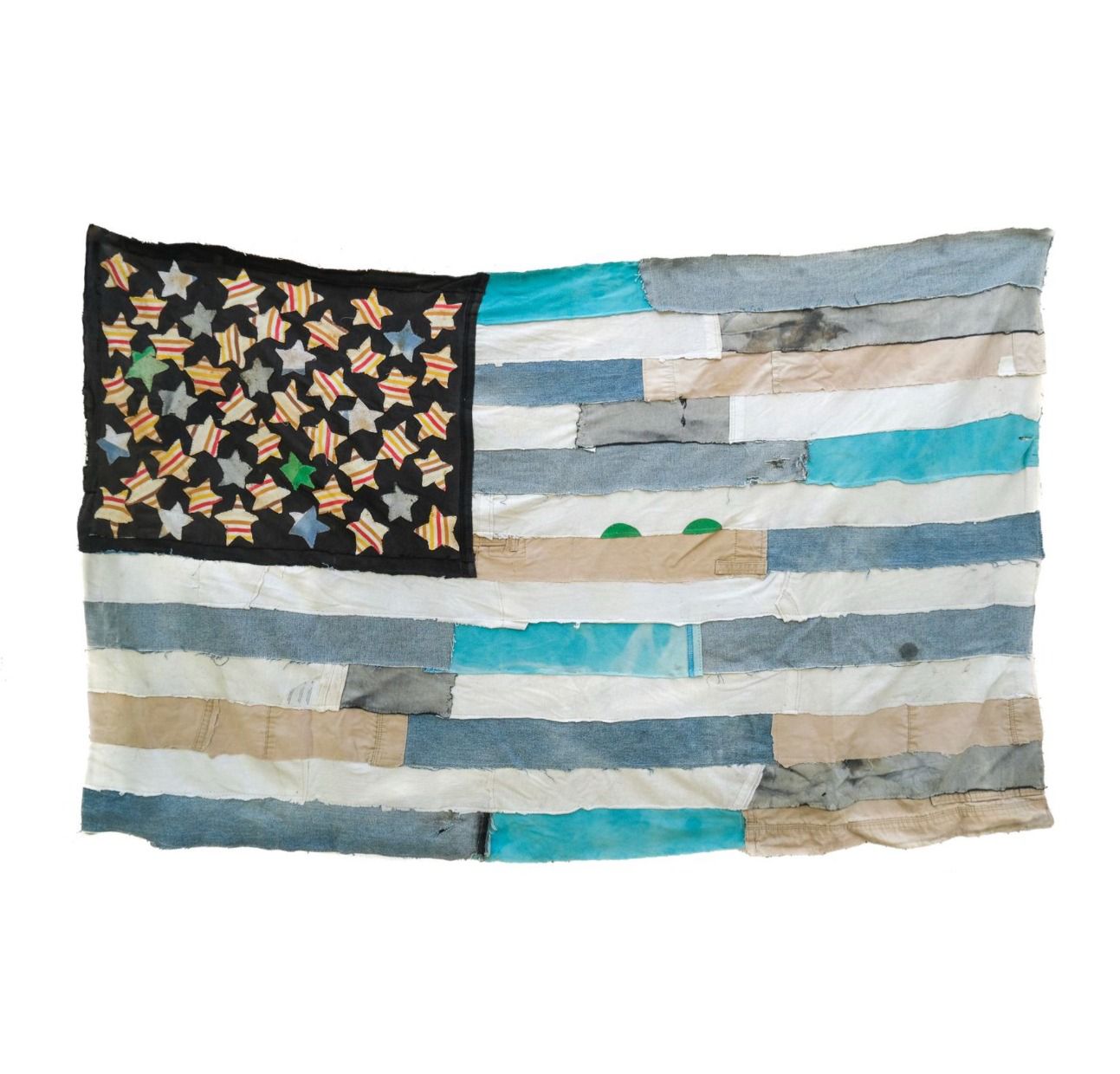
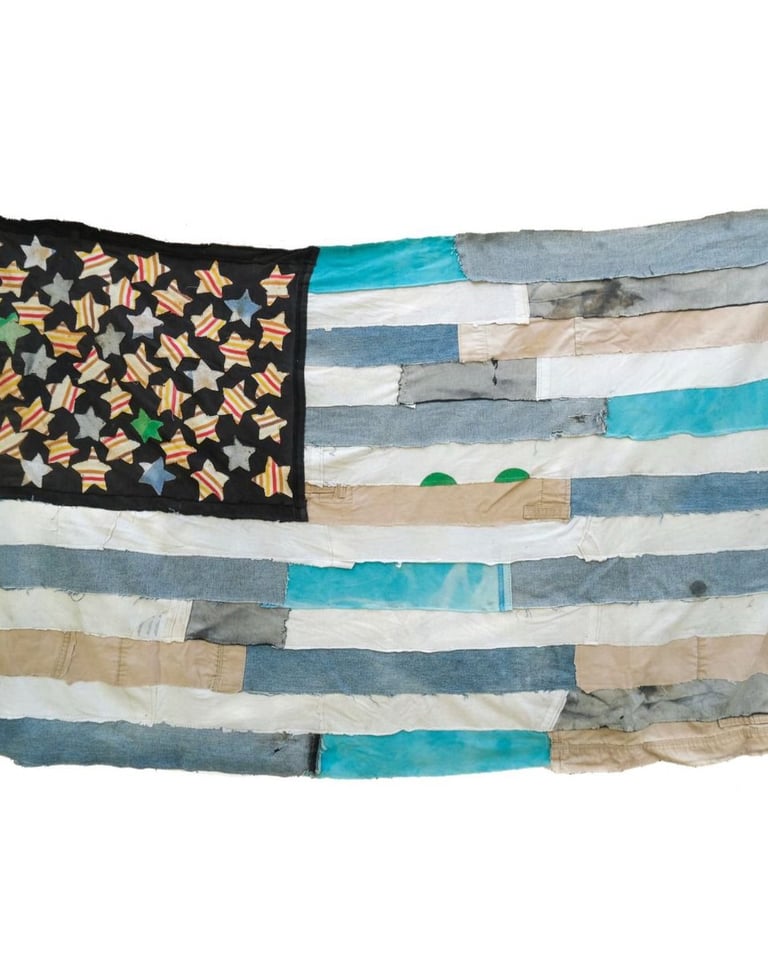
Alan Pfeiffer, “Flag,” 2017
Luis Palomino on view at Dolores 54
Contact
Questions or tips? Reach out anytime.
info@artinsanmiguel.com
© 2026. All rights reserved.
Join Art in San Miguel
Stay close to the scene - get fresh stories and event updates.