
Fábrica la Aurora: A World of Its Own
Exploring San Miguel's former textile factory that is now a living space for creativity, community, and history. Written by Alexandra Rauscher.
MONOCLE
3/30/20263 min read
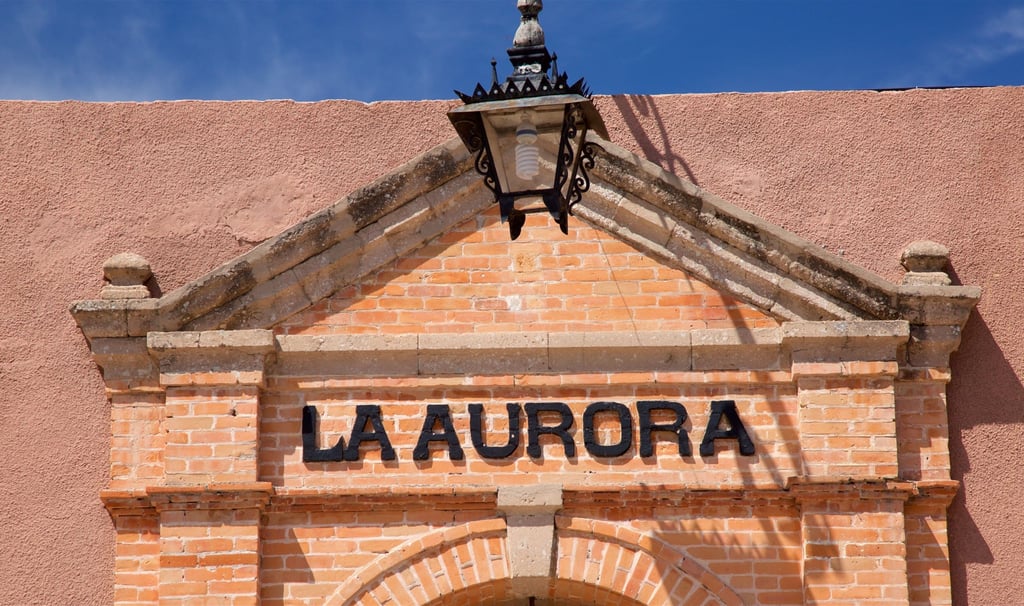
Entrance to Fábrica la Aurora
Just a few minutes' walk from San Miguel's historical center, past a small footbridge, lies a former textile factory — today home to one of Mexico’s singular art and design destinations. La Aurora, read the large letters above the brick archway of its entrance gate. The name means first light, and as locals will tell you, it should be taken literally. A visit is best begun early, when the gate opens, artists settle into their studios, and the morning light streams through the gallery windows. Because the Fábrica la Aurora rewards time spent; behind that gate awaits a world of its own, drawing visitors in completely, releasing them back into reality only hours later, once they have lost all sense of time and place.
Opened in 2004, this unique, multidisciplinary space has been enriching San Miguel's cultural scene for over two decades, not just as a center for art and design, but as a place of community and living history.
For most of the 20th century, the factory was a cornerstone of San Miguel's economy, producing manta fabric used to manufacture textiles across Mexico — but when demand for local fabrics declined and production costs rose, it was forced to shut its doors, leaving behind little more than rusted machinery and empty halls. The year was 1991.
That was seemingly that, until a small group of artists, among them Christopher Fallon, Mary Rapp, Merry Calderoni, and DeWayne Youts, arrived with a vision, part restoration, part defining art project. What they built is now a cultural hub where the past is not preserved behind glass, but integrated into the present. Amazingly, former workers still return regularly, most recently to build the traditional altar for Viernes de Dolores, the Friday before Holy Week.
And Terra is not the only reason to stay a little longer. The cafés nearby, shaded benches, and a stream with ducks offer plenty of reasons to wander between studios. Visitors looking to engage more deeply can join one of the regularly changing workshops hosted on the grounds. For those who prefer a guided experience, the Fábrica's monthly Art Walks are a popular option; held on the first Saturday of every month from 5 to 7 pm, all galleries open, debuting new exhibitions, offering drinks alongside live music.
Whichever way you choose to spend your time, the hours spent at Fábrica la Aurora will pass quickly - and before you know it, you will find yourself at the gate, stepping back out into the world you left behind. The transition feels strange at first. La Fábrica Aurora has a way of making time feel suspended, demanding a kind of presence that daily life rarely leaves room for. One thing is certain: a single visit will never be enough.
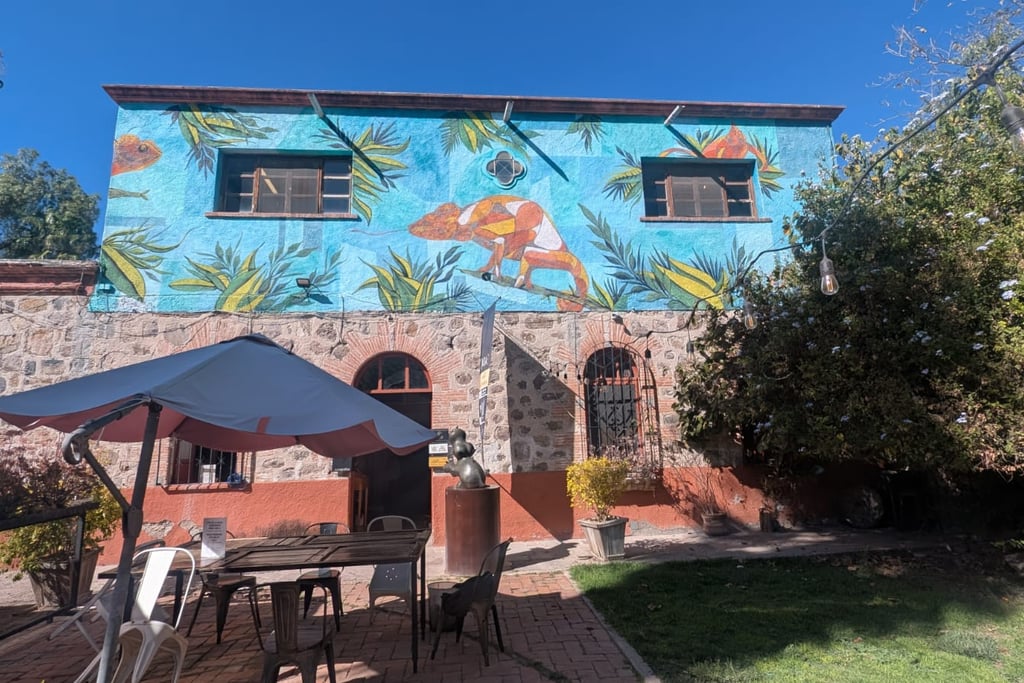
Outside area with café and gallery building
Once inside, a gracious courtyard opens up before you. Traces of the building's industrial past are everywhere: oil-stained floors, high-ceilinged corridors, and massive old machines that now stand in the galleries like monuments to another era. With so much to discover in every direction, it is easy to lose yourself entirely, which, here, feels like exactly the point. If approached with the same openness it offers, the space has a way of inspiring visitors at every turn.
The path through Fábrica la Aurora is not only designed to evolve naturally, it also invites unforeseen encounters. Take the second corridor to the right after entering, and you will find yourself in the gallery of artist Estefanía Mongrello, who has been working here for three years. Her acrylic paintings are colorful portals into Mexican landscapes, vivid with memories and the traces some places leave on us long after we have moved on. Stepping past the gallery, you can knock directly on Mongrello’s studio door. Meeting the artist, you will likely discover a dimension of her work no gallery wall can contain.
Further into the grounds, tucked opposite one of the cafés, is the small studio of artist Terra Mizwa. She has been part of Fábrica la Aurora for over 20 years, almost right back to when the space reopened in 2004, her work evolving right alongside venue. "By the time people make it back here, they usually have a slightly vacant look," she jokes. Having known the founders personally and witnessed the project grow from its earliest days, a conversation with Terra is a window into the living history of a place that many of its artists call home.
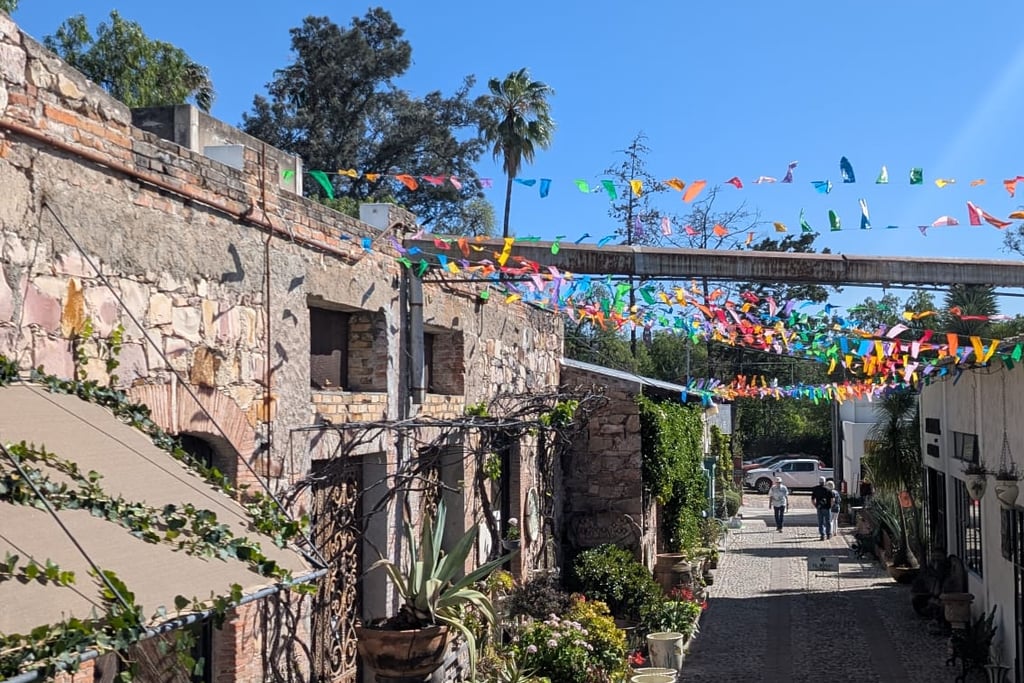
In between factory buildings
Contact
Questions or tips? Reach out anytime.
info@artinsanmiguel.com
© 2026. All rights reserved.
Join Art in San Miguel
Stay close to the scene - get fresh stories and event updates.