The Art of Reinvention
The Project "Hecho en Babu" Gives Glass a Second Life. Written by Alexandra Rauscher.
BEYOND SAN MIGUEL
7/13/20264 min read
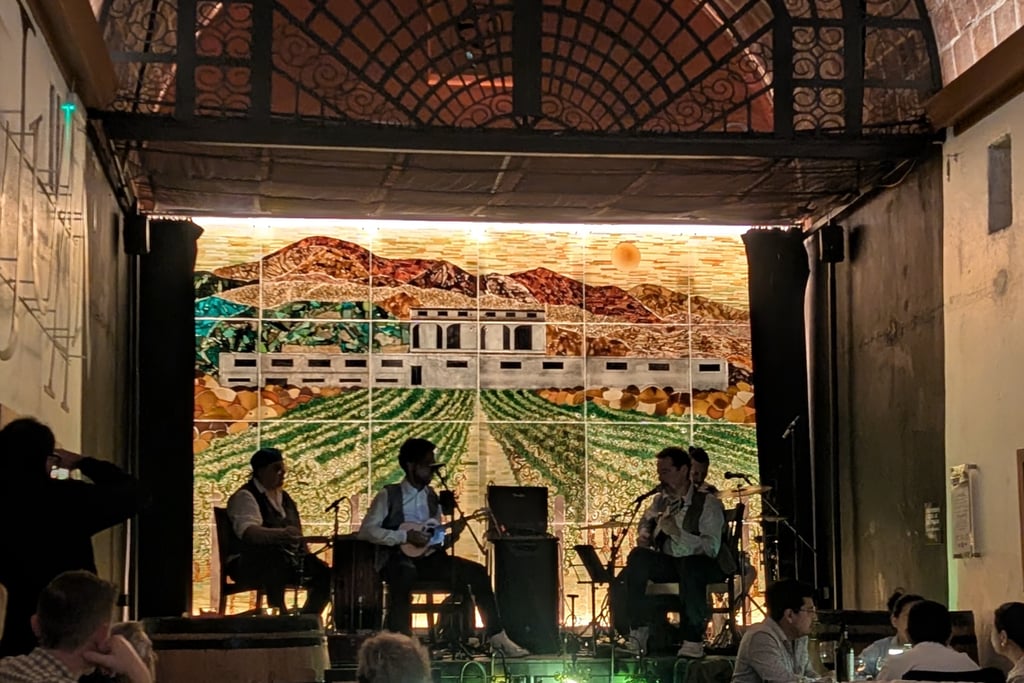
As live music sends soft samba sounds through the room, the stage of Restaurant ORIGENS in Tequisquiapan - a town about 100 kilometers southeast of San Miguel de Allende - is illuminated by what may be the most complex puzzle to be found far and wide: on a surface of 16 square meters, a glass mural of the nearby Cavas de San Juan vineyard shines from the back wall, a mountain range rising behind it, lit by the low evening sun. In its shadow, the musicians strum their guitars. While their tunes carry the guests to the streets of Rio de Janeiro, the artwork ensures their eyes are firmly anchored in the here and now.
The mural consists of thousands of glass fragments and was realized in more than 9,000 hours of work. Its material stems from bottles that used to be ordinary everyday objects - and, through the hands of local artists working in the project "Hecho en Babu," have been given a second life. "Glass is 100% infinitely recyclable," explains Raquel Moreno of the project team. It loses neither quality nor purity in the process. "The problem is that we aren't using it fully because the infrastructure to process it properly does not exist," Moreno adds.
In Mexico, only about 12 percent of more than 2,200,000 metric tons of glass used each year is recycled. Economically, glass recycling simply is not attractive: "If you collect it, only some recyclers will take it. And they only accept certain types - clear, green, amber [beer bottles], and maybe cobalt blue glass, paying between 20 and 50 cents per kilogram." Without recycling, glass is anything but sustainable: "It's not biodegradable. Once it's out there, it will stay for thousands of years," Moreno explains.
Hecho en Babu invites the local community to collect their glass and drop it off directly at the project site - a studio, gallery, workshop, and community space all at once. There, old glass, ranging from wine to perfume bottles, is revived. Many pieces take on new shapes as other everyday objects: restaurants and households in the area, for example, use drinking glasses cut from bottles. Other remains of glass get even luckier and become art - the project's primary vision.
The glass mural of "Cavas de San Juan" vineyard at ORIGENS
"Making art, each piece is an opportunity to reinvent yourself," says Azucena Basante, who has been leading the project, designing new collections and one-of-a-kind pieces for over 37 years. A walk around the grounds makes clear just how many times she and her team have reinvented themselves and the material over the years - in ways both big and small. The place itself is a work of art: there is a table resting on a foundation of wine bottles, mirrors framed by colorful glass shapes, glass feathers dangling from wooden lamps, and a collection of glass jewelry.
In workshops, visitors can experience the material themselves: from creating small pictures, wind chimes, and dream catchers to larger experiences designing mirrors, lamps, and tables that can later decorate their own homes.
The process of creating your own piece of glass art demands full focus. In front of you lies an object waiting to be shaped, alongside a pile of glass fragments in every color and form. Letting yourself sink into the work, you find yourself, intuitively, drawn to certain colors and shapes without quite knowing why. Rationally, you have to make active decisions about how the piece takes form. And then there's the physical layer: piecing the fragments together with patience and a careful touch. Meanwhile, Moreno, the instructor, shares insights into the project's history, the more than ten glassmaking techniques in the team's repertoire, as well as the challenges they face.
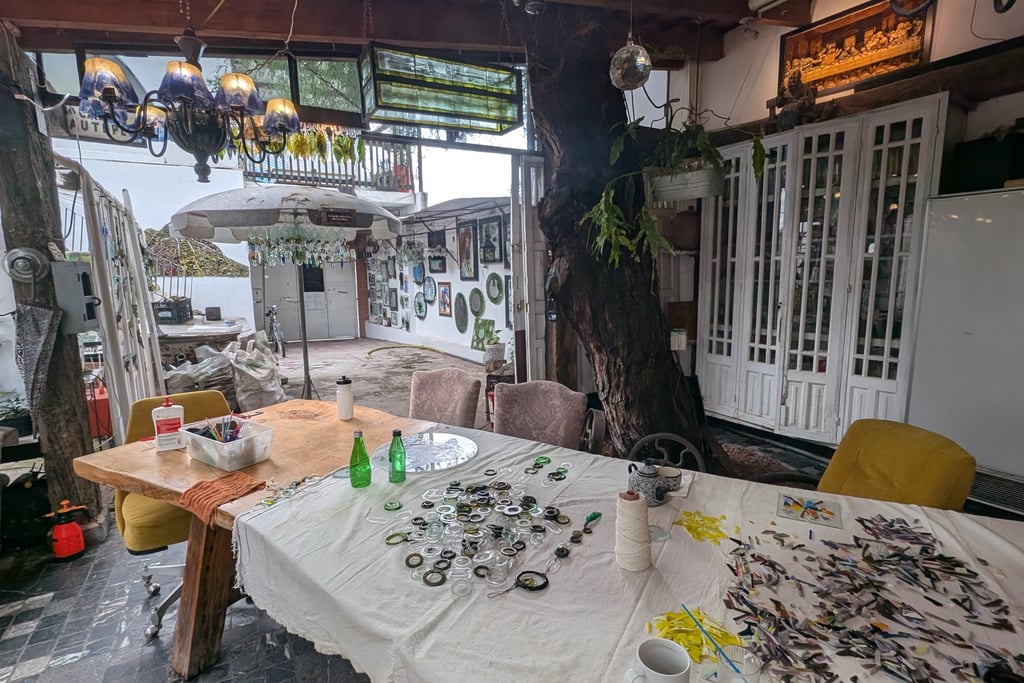
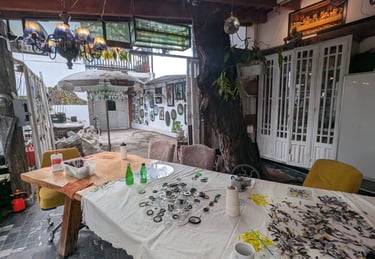
On the grounds of Hecho en Babu
At the moment, far more glass is donated to the project than can be processed. "Our ideal situation would be to have a mill next door, grind it all, and store it in containers," says Moreno. "It's a beautiful material for construction - a very good sand." This application is becoming increasingly relevant, as real sand grows scarcer worldwide - it is the second most consumed natural resource on Earth, after water. Glass sand shares similar properties, making it a strong substitute. However, the amount of glass that is processed into sand is, to date, minimal compared with industrial glass production worldwide - making local projects that raise awareness in their communities all the more important.
Producing something new from something that already exists - that is reinvention, in its essence. In a world of abundance, Hecho en Babu offers a different perspective: recognizing the value in what we already hold in our hands, feeling it, playing with it, and eventually seeing it with new eyes. "People's personality shows in the shapes and colors they choose, and how they arrange them," says Moreno, who has accompanied many different workshop groups. The process does not exactly offer instant gratification. But it activates something else: the natural creativity we all have in us - and that at Hecho en Babu, takes shape in our own, unexpected piece of art, made from an enduring material far too precious to throw away.
Hecho en Babu is also available on Instagram and Facebook. To contact Raquel Moreno about workshops, message +52 414 109 1951 or write an email to hechoenbabu@gmail.com.
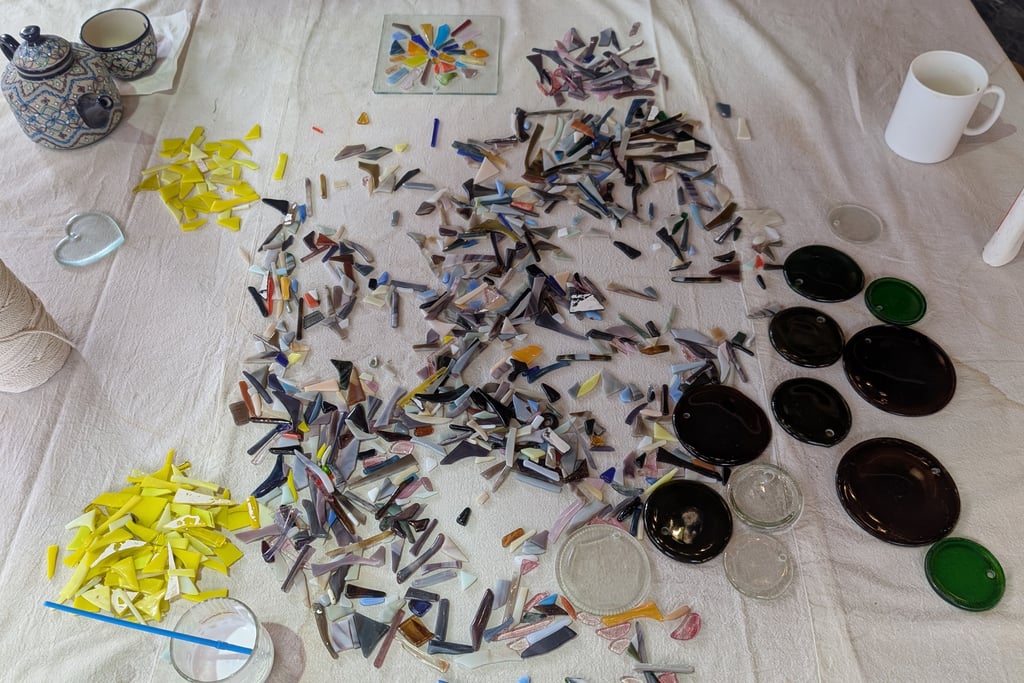
Creating glass art in a workshop at Hecho en Babu
Contact
Questions or tips? Reach out anytime.
info@artinsanmiguel.com
© 2026. All rights reserved.
Join Art in San Miguel
Stay close to the scene - get fresh stories and event updates.